Choosing a Cold Forging Die in 2026 is no longer a simple matter of selecting hardened tool steel. The right decision affects dimensional accuracy, production speed, maintenance cost, and worker safety. A die may look excellent after inspection yet fail after a few thousand strokes. That gap deserves attention.
Dr. Taylan Altan, a respected forging researcher, offers a useful principle: “Die design must be considered as part of the entire forming process.” This view remains highly practical. Engineers should examine the workpiece material, reduction ratio, lubrication, press capacity, and expected service life together. A high-strength alloy may require carbide inserts, advanced coatings, or carefully controlled preheating. Stainless steel can punish a poorly polished cavity through galling and unstable material flow. Small details matter.
Measure the real conditions.
In 2026, simulation software can predict stress concentration, filling behavior, and likely crack locations before machining begins. However, software does not replace production evidence. Review previous die failures, inspect worn edges, and compare trial data with the original model. Consider suppliers that document heat treatment, hardness testing, coating thickness, and dimensional inspection. Total cost matters more than the purchase price. A cheaper Cold Forging Die may create more scrap, longer setup intervals, and repeated tooling changes.
The choice is rarely perfect. Material prices change, lubricants behave differently, and production teams sometimes overlook minor alignment errors. This guide examines the key selection criteria, while recognizing that real factory experience must challenge every recommendation.
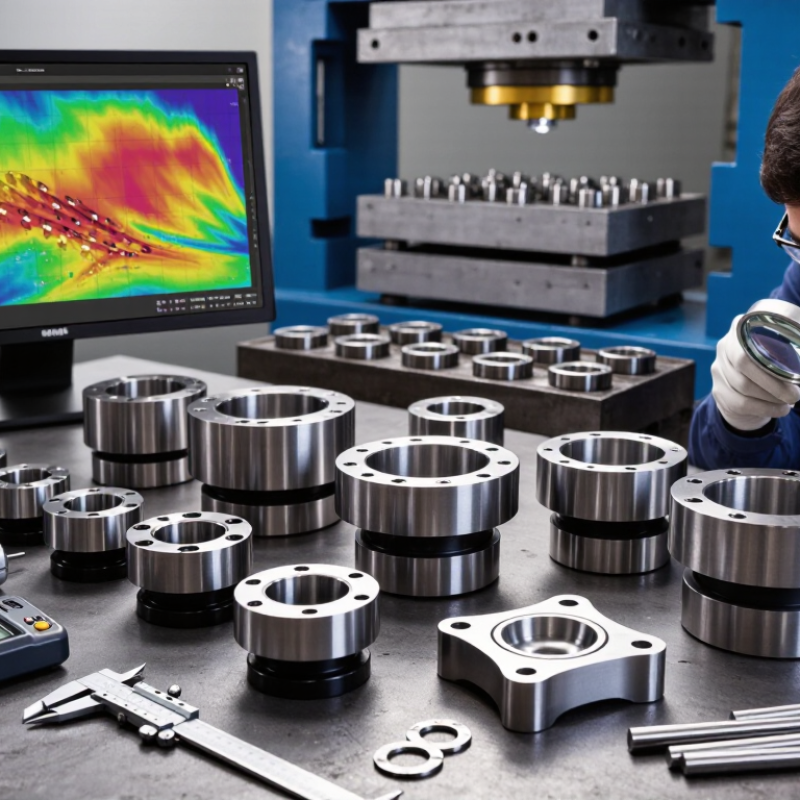
A cold forging die is a hardened tool that shapes metal at room temperature under high pressure. It controls the part’s profile, grain flow, surface finish, and dimensional accuracy. Common types include heading dies, upsetting dies, forward-extrusion dies, backward-extrusion dies, and coining dies.
Die selection should follow the part’s geometry and production load. Forward extrusion suits long, reduced sections. Backward extrusion creates cups, sleeves, and hollow forms. Heading dies efficiently produce bolts and pin heads.
According to Grand View Research, the global cold forging machine market was valued at about USD 1.9 billion in 2023, with steady growth expected through 2030. This trend increases pressure on die life and maintenance planning.
In practice, tool steel hardness alone is not enough. Toughness, carbide distribution, lubrication, and heat treatment matter equally. A harder die can still fail early.
Tips: Check forming force, reduction ratio, corner radius, and expected production volume before choosing a die. Review the ISO 4957 tool-steel classification and request verified heat-treatment records. For abrasive materials, consider surface treatment after testing. Small geometry changes may reduce stress sharply. Do not ignore trial results. A simulation can predict filling, but shop-floor friction often behaves differently. The best choice is sometimes a less ambitious design with easier inspection and repair.
Start with the part’s material. Low-carbon steel, stainless steel, aluminum, and titanium create different forming loads. Stainless steel may increase friction and galling risks. Titanium often demands stronger control of heat and lubrication. Review yield strength, work-hardening behavior, and surface condition before selecting die steel.
Shape matters just as much. Sharp corners concentrate stress and can shorten die life. Generous radii improve metal flow, but they may change the finished profile. Deep cavities, thin walls, and multiple steps may require separate forming stages. A preform can reduce cracking and uneven material movement. Small details matter.
Measure the part carefully. Diameter, length, wall thickness, tolerance, and required surface finish determine the die layout. Check the press capacity and available stroke as well. Production requirements then influence the die’s construction. Short runs may justify a simpler, serviceable design. High-volume production may need replaceable inserts, stronger backing, and easier maintenance access. I have seen a die match the drawing yet fail during trials because lubrication and alignment were underestimated. Simulation helps, but it cannot replace controlled testing. Record forming force, temperature, wear, and dimensional changes during early runs. Revise the design when evidence disagrees with the first calculation.
How to Choose a Cold Forging Die in 2026?
Choosing a cold forging die starts with the forming load, part geometry, and production volume. In shop-floor evaluations, powdered tool steel often handles repeated impact better than conventional tool steel. However, higher hardness does not guarantee longer service life. A brittle die can chip around sharp corners or thin sections.
Coatings reduce friction and protect working surfaces from adhesive wear. Common options include hard nitride coatings and low-friction carbon-based layers. The correct choice depends on material, lubricant, pressure, and forming speed. A coating may survive millions of strokes in one process but fail quickly in another. Test coupons help, although they cannot perfectly copy production conditions.
Strength should be checked through compressive performance, toughness, and resistance to thermal fatigue. Measure wear at fixed intervals, not only after failure. Records matter. Track cracks, dimensional drift, ejection force, and surface damage. These details reveal whether the die material or coating is responsible.
Service life is an estimate, not a promise. A die producing 300,000 parts may outperform one rated for a million parts when maintenance is poor. I still get this wrong sometimes. Excessive polishing can remove useful surface protection, while insufficient inspection allows small cracks to grow. Review the full operating cycle before selecting the hardest available die. Temperature changes everything.
How to Choose a Cold Forging Die in 2026?
Evaluate Die Design, Manufacturing Accuracy, and Maintenance Needs
A reliable cold forging die begins with a design that matches the material, shape, and production volume. Check metal flow carefully, especially around sharp corners and thin sections. Poor flow creates uneven stress and premature cracking. A practical design may use generous radii, balanced cavities, and replaceable wear components. Not every complex design performs better. Sometimes, a simpler die produces steadier parts and easier inspections.
Manufacturing accuracy matters just as much. Ask for documented tolerances, hardness testing, surface-finish records, and dimensional inspection data. Small alignment errors can create flashing, inconsistent heads, or excessive press loads. Experienced manufacturers usually verify critical dimensions before heat treatment and again after finishing. This process is not perfect, though. Thermal distortion can still appear, so acceptance checks should use actual production samples, not drawings alone.
Tips: Review maintenance access before purchasing. Confirm how quickly inserts, guides, and damaged sections can be replaced. Record stroke counts, lubrication conditions, and early wear patterns during trials. Inspect contact surfaces under magnification. A die that looks excellent on day one may become expensive if cleaning requires long stoppages. Leave room for adjustment, because real production rarely follows laboratory conditions exactly.
| Die Option | Typical Die Design | Suitable Applications | Typical Working Hardness | Typical Bore / Profile Accuracy | Typical Surface Finish | Relative Wear Resistance | Maintenance Demand | Repairability | Best Selection Priority |
|---|---|---|---|---|---|---|---|---|---|
| Monolithic cold-work tool-steel die | Single-piece hardened die with generous radii, polished working surfaces, and relief behind the forming zone. | Low-to-medium production volumes, moderate forming loads, and applications requiring economical tooling. | 58–64 HRC | Approximately ±0.01–0.03 mm | Ra 0.2–0.8 μm | Medium | Medium; monitor edge rounding and galling | Good | Low initial tooling cost and straightforward machining |
| Powder-metallurgy tool-steel die | Precision-machined insert or one-piece die using a fine, uniform carbide distribution for improved wear resistance and toughness. | Medium-to-high production, abrasive work materials, and parts with demanding dimensional consistency. | 60–66 HRC | Approximately ±0.005–0.02 mm | Ra 0.1–0.4 μm | High | Medium; inspect for micro-chipping and polishing loss | Moderate | Balanced die life, toughness, and dimensional stability |
| Tungsten-carbide insert with steel holder | Replaceable carbide working insert supported by a prestressed or interference-fit steel holder. | High-volume heading, extrusion, upsetting, and applications with severe compressive wear. | Carbide: approximately 88–93 HRA | Approximately ±0.003–0.015 mm | Ra 0.05–0.3 μm | Very high | High; control impact, misalignment, and insert cracking | Insert replacement preferred | Maximum wear resistance and stable high-volume output |
| Multi-layer or segmented carbide die | Multiple fitted rings or segments distribute hoop stress and support large reductions or high-pressure extrusion. | Large diameter changes, high extrusion ratios, and dies exposed to intense internal pressure. | Carbide: approximately 88–93 HRA | Approximately ±0.005–0.02 mm | Ra 0.05–0.3 μm | Very high | High; inspect interfaces, preload, and ring condition | Good through segment replacement | Stress control and reduced risk of catastrophic die failure |
| Coated tool-steel or carbide die | Base die is finished and coated with a hard, low-friction surface layer after dimensional inspection. | Adhesive work materials, high sliding contact, galling risk, and processes using controlled lubrication. | Base: 58–66 HRC or 88–93 HRA | Approximately ±0.005–0.02 mm before coating | Ra 0.05–0.3 μm | High when coating is intact | Medium; inspect coating wear and exposed substrate | Recoating or insert replacement | Lower friction, reduced galling, and longer polishing intervals |
| Practical selection rule: Choose the die design only after confirming forming load, material flow, reduction ratio, alignment, lubrication, and required part tolerance. For high-volume production, replaceable carbide or segmented designs usually justify their higher initial cost when wear, downtime, and dimensional drift are major concerns. | |||||||||
Choosing a cold forging die in 2026 requires more than comparing quotations. The right choice balances purchase cost, dimensional quality, and production efficiency. Start with material grade, part geometry, reduction ratio, and expected batch size. A complex head may need stronger inserts or staged forming. Ask for documented hardness, heat-treatment results, and inspection records. These details reveal how consistently the die can hold tolerance. A low price is not always economical.
Compare total cost, not only the invoice. Include machining, setup time, lubricant use, repairs, scrap, and die replacement. A die costing 15 percent more may reduce adjustment time on every shift. For example, a stable die can prevent burrs on a 12-millimeter fastener and reduce sorting. Request sample parts from a production-like trial, not a polished demonstration. Measure critical dimensions before and after repeated strokes. Small drift matters.
Efficiency depends on changeover, cooling, maintenance access, and predictable service life. Choose a design that operators can inspect without lengthy line stoppages. Standardized spare components may shorten recovery after an unexpected crack. Still, published life estimates deserve verification under your actual loads. In practice, our first die selection has not always been perfect. Early trials sometimes expose overlooked lubrication or alignment issues. A revised specification can include the lubrication interval, alignment tolerance, and crack-inspection frequency.
Relative engineering planning scores for common cold-forging die materials. Higher scores indicate lower cost, better wear performance, or greater production suitability.
Conventional tool steels generally offer the lowest initial cost and easier machining. Powder metallurgy high-speed steels provide a strong balance of wear resistance and toughness, while tungsten carbide can deliver excellent wear resistance and high-volume efficiency but requires higher investment and careful control of impact loading. Final selection should also consider part geometry, forming pressure, lubrication, heat treatment, and required die life.