Choosing the right Hot Forging Part manufacturer affects product strength, dimensional accuracy, delivery stability, and long-term operating costs. The best supplier is not always the largest one. A smaller forge may provide better tooling support, faster communication, or stronger process control for specialized components.
Hot forging reshapes heated steel, aluminum, titanium, and other alloys under controlled pressure. The process can improve grain flow and fatigue resistance. However, performance depends on more than a powerful press. Heating temperature, die design, lubrication, trimming, heat treatment, and inspection must work together. Dr. John A. Schey, a respected metal-forming researcher, wrote, “Forging is the working of metal by plastic deformation under conditions of compressive stresses.” That principle remains practical on today’s factory floor.
This guide examines leading Hot Forging Part manufacturers through measurable criteria. These include forging capacity, material experience, machining services, quality certifications, traceability, and production consistency. It also considers useful details, such as whether a supplier can maintain tight tolerances after heat treatment. Good manufacturers should explain their testing methods clearly. They should provide inspection reports, sample approvals, and realistic production schedules.
The evaluation is not perfect. Public information can hide subcontracting, outdated equipment, or uneven quality between facilities. That deserves attention. A polished website proves little. Factory audits, technical discussions, and verified customer references offer stronger evidence. The following overview compares manufacturers with a practical focus: engineering capability, repeatability, responsiveness, and the real demands of industrial buyers.
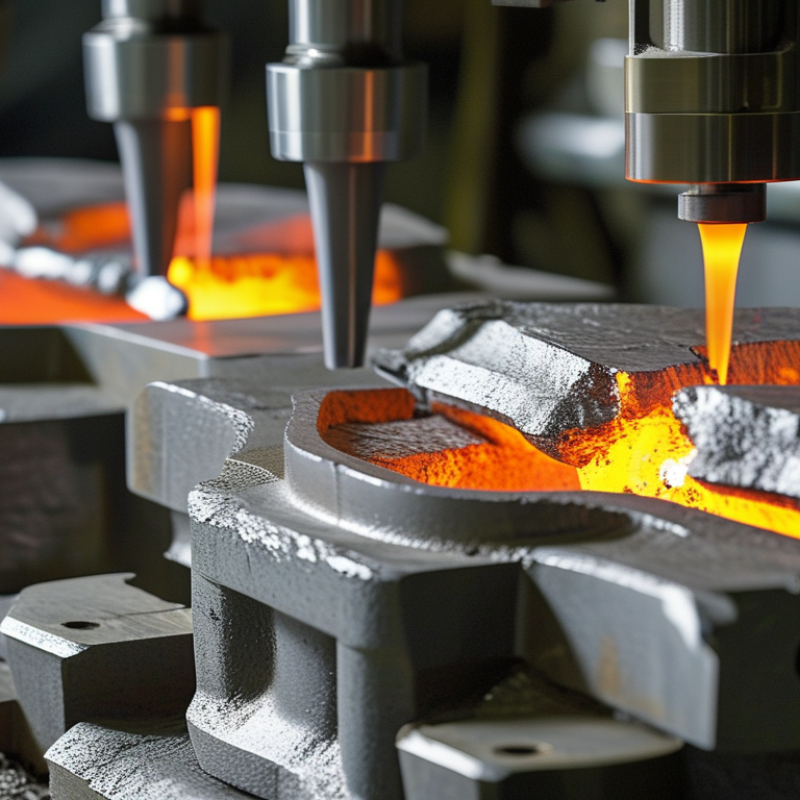
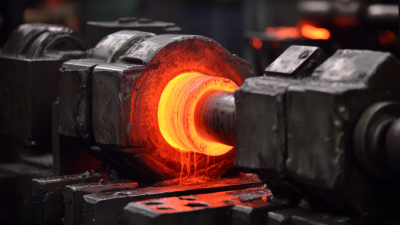
Hot forging heats metal above its recrystallization temperature, making it easier to shape under controlled pressure. Steel billets often reach 900–1,250°C, although the correct range depends on the alloy and part design. A heated billet enters a die, where a press or hammer forms it into a connecting rod, gear blank, flange, or other industrial component. The process can align grain flow with the part’s load path, improving strength and fatigue resistance. It can also reduce internal voids, but it does not correct every material defect.
Why use hot forging instead of machining a part from solid bar? It usually creates less waste and supports durable shapes with heavy sections, sharp transitions, or demanding load conditions. Skilled manufacturers monitor furnace temperature, die wear, forging force, and cooling time. They may also provide heat treatment, dimensional inspection, ultrasonic testing, and material traceability. These details matter when a part must perform near vibration, impact, or repeated pressure.
However, hot forging is not a magic solution. Dies cost money, and poor temperature control can cause scale, cracking, or uneven properties. A design that looks simple on paper may forge badly. Engineers should review draft angles, flash, tolerances, and machining allowance with the manufacturer before production. That conversation is often where reliability begins.
Hot forging commonly uses carbon steel, alloy steel, stainless steel, aluminum, titanium, and nickel-based alloys. Steel remains dominant because it combines strength, availability, and predictable deformation. The World Steel Association reported approximately 1.89 billion tonnes of crude steel production in 2023. That enormous supply base supports extensive forging applications, although steel production data should not be mistaken for forging demand.
Aluminum is selected when weight reduction matters. The International Aluminium Institute recorded about 70.6 million tonnes of primary aluminum production in 2023. Forgers use suitable aluminum alloys for aircraft fittings, suspension components, housings, and structural brackets. Titanium offers high strength at low weight, while nickel-based alloys tolerate extreme heat in turbine and energy equipment. These materials require tighter temperature control and more experienced process planning.
Part geometry usually determines the material choice. Common hot forged parts include crankshafts, connecting rods, gears, axles, shafts, flanges, pressure components, and high-strength fasteners. Aerospace production also uses forged discs, rings, and landing-gear parts. The U.S. Geological Survey’s Mineral Commodity Summaries 2024 provides useful production data for aluminum, titanium, and nickel inputs, but it does not measure finished forging volumes directly. That limitation matters. Industry comparisons can look precise while hiding differences in alloy grades, part size, and regional reporting methods. Forging still demands practical judgment, not data alone.
Hot forging is widely used for high-strength components because plastic deformation refines the grain flow and improves fatigue performance. The chart shows typical industrial starting-temperature ranges for major hot-forged material families; actual temperatures vary with alloy grade, section size, and forging equipment.
Carbon and alloy steels are the most widely used hot-forging materials. Stainless steels, aluminum alloys, titanium alloys, and nickel-based superalloys are selected when corrosion resistance, low weight, or high-temperature strength is required.
Typical products include crankshafts, connecting rods, gears, axles, shafts, flanges, bolts, suspension components, pressure-containing fittings, turbine discs, and selected aerospace structural parts.
The leading suppliers are generally evaluated by forging capacity, die-design capability, heat-treatment control, inspection systems, material certifications, dimensional consistency, and experience with the required part type.
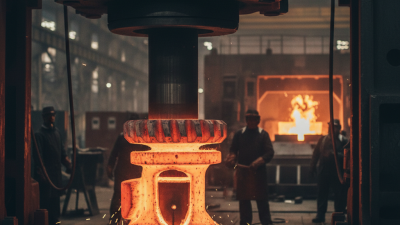
What Are the Top Hot Forging Part Manufacturers? The stronger question is how they control production. Hot forging starts with cutting steel billets into measured slugs. Induction or gas furnaces then heat them, usually between 900°C and 1,250°C, depending on the alloy. Dies shape the softened metal under repeated hammer or press loads. Temperature matters greatly. A billet that cools too quickly may develop incomplete filling or harmful internal stress.
After forging, parts receive trimming, heat treatment, shot blasting, and precision machining. Process records should track furnace temperature, die wear, reduction ratio, and cooling time. The World Steel Association reported 1.89 billion tonnes of crude steel production in 2023. That scale increases material availability, but it does not guarantee forging quality. Scrap rates still depend on tooling design and operator judgment.
Testing usually combines visual inspection, dimensional measurement, hardness checks, and ultrasonic examination. Tensile and impact tests verify strength and toughness against the specified material grade. ASTM A370 provides widely used mechanical-testing methods, while ISO 6507 supports Vickers hardness testing. Industry energy studies also identify forging as a heat-intensive process, making furnace efficiency and energy records important supplier indicators. Some manufacturers report impressive capability figures, yet testing details remain vague. That should invite questions, not automatic trust. A reliable supplier shares traceability documents, calibration records, sample results, and corrective-action evidence before shipment.
What Are the Top Hot Forging Part Manufacturers?
A leading hot forging manufacturer controls more than press capacity. It combines material knowledge, process engineering, and disciplined inspection. Grand View Research’s 2024 Metal Forging Market analysis estimated the global market at approximately USD 41 billion in 2023. That scale increases pressure on suppliers to deliver repeatable quality, not isolated success. Strong manufacturers understand steel chemistry, heating curves, die wear, and grain flow. They can explain why a part failed, not merely replace it.
Evidence matters. A capable facility should provide heat-treatment records, material certificates, dimensional reports, and full batch traceability. It should also use process controls around billet temperature, forging force, and cooling speed. The 2024 World Steel Association Short Range Outlook forecast global steel demand growth of 1.2% in 2024. More demand can expose weak production controls. Traceability matters. So does independent non-destructive testing, especially for safety-critical components.
Energy performance now deserves equal attention. The U.S. Department of Energy’s Industrial Decarbonization Roadmap identifies iron and steel among the highest-emitting industrial sectors. Efficient furnaces, heat recovery, and measured scrap rates therefore reveal operational maturity. A supplier should also support prototype trials, die modification, and realistic tolerance reviews. The press is only one part. No manufacturer gets every variable right. A strong partner admits process limits and improves them through documented corrective action. That honesty is often more valuable than an impressive equipment list.
What Are the Top Hot Forging Part Manufacturers?
How Can Buyers Compare and Select Hot Forging Part Manufacturers?
Buyers should compare evidence, not impressive factory photographs. A reliable supplier should explain billet heating, die design, forging pressure, trimming, and heat treatment. Ask for process capability data, material certificates, dimensional inspection records, and non-destructive testing results. The World Steel Association reported 1.888 billion tonnes of crude steel production in 2023. That scale makes heat and material traceability essential. Each batch should connect to a furnace record, operator, inspection result, and shipment.
Request comparable quotations using identical drawings, alloys, annual volumes, tolerances, and delivery terms. Check whether tooling, sampling, testing, packaging, and freight are included. Review first-article inspection, PPAP support, corrective-action speed, and on-time delivery history. ISO 9001 certification helps, but it does not prove forging competence. Demand evidence.
Energy performance also deserves attention. The International Energy Agency reported that industry consumed about 37% of global final energy in 2022. Ask manufacturers to disclose furnace efficiency, scrap rates, reheating controls, and improvement targets. A lower unit price may hide unstable heating or excessive machining allowance. Visit the production floor if possible. Feel the workflow: hot billets, scale removal, die storage, and inspection queues reveal practical discipline. I would not select a supplier from one successful sample alone. A polished sample can hide weak repeatability, and buyers sometimes overlook that uncomfortable risk.
Buyer comparison matrix based on commonly used hot-forging capabilities, quality indicators, and supplier-evaluation criteria.
| Evaluation Dimension | Typical Reference Data | What Buyers Should Verify | Importance |
|---|---|---|---|
| Forging Process | Open-die, closed-die, upset forging, and precision hot forging are commonly available process categories. | Confirm whether the supplier’s equipment and tooling method match the part geometry, production volume, and required repeatability. | High |
| Material Capability | Common materials include carbon steel, alloy steel, stainless steel, aluminum alloys, titanium alloys, and nickel-based alloys. | Request an approved material list, heat-treatment capability, material certificates, and traceability procedures. | High |
| Typical Forging Temperature | Steel hot forging is commonly performed at approximately 950–1,250°C; aluminum alloys are often forged around 350–500°C, depending on grade and process. | Check temperature monitoring, furnace calibration, heating uniformity, transfer time, and process records. | High |
| Part Weight Range | Production capability may range from small parts below 1 kg to large forgings exceeding 100 kg, depending on press or hammer capacity. | Compare the supplier’s proven part-weight range with the finished-part weight, billet size, and expected material yield. | High |
| Equipment Capacity | Forging presses and hammers may range from several hundred tonnes to several thousand tonnes of forming force. | Verify machine tonnage, table size, stroke, die space, maximum billet dimensions, and actual production references for similar parts. | High |
| Dimensional Tolerance | Typical as-forged dimensional variation is often approximately ±0.5–2.0 mm, depending on part size, geometry, tooling, and process control. | Review sample inspection reports and confirm which dimensions require machining, calibration, or tighter process controls. | High |
| Draft Angle and Machining Allowance | Common draft angles are approximately 3–7°; machining allowances frequently fall around 1–3 mm, but both vary by material and geometry. | Ask for a manufacturability review covering draft, parting line, flash, radii, allowance, and die life. | Medium |
| Heat Treatment | Typical treatments include normalizing, annealing, quenching and tempering, solution treatment, and aging. | Confirm furnace working zone, load capacity, quench medium, hardness range, metallographic controls, and process qualification. | High |
| Inspection and Testing | Common controls include dimensional inspection, hardness testing, tensile testing, ultrasonic testing, magnetic-particle testing, and dye-penetrant testing. | Check laboratory equipment, calibration records, inspection frequency, sampling plans, and whether testing is performed in-house or externally. | High |
| Quality Management | ISO 9001 is a widely used quality-management framework; automotive programs may additionally require IATF 16949 and customer-specific requirements. | Validate certificate scope, issuing body, expiration date, corrective-action performance, and relevant customer-audit results. | High |
| Tooling and Die Development | In-house die design, CAD/CAE simulation, CNC machining, heat treatment, and die repair can reduce development delays. | Compare tool-design lead time, simulation capability, die material, expected die life, revision control, and tooling ownership terms. | High |
| Secondary Operations | Available services may include trimming, shot blasting, descaling, straightening, machining, drilling, and surface treatment. | Determine whether integrated processing can reduce logistics, handling, inspection duplication, and total landed cost. | Medium |
| Production Volume and Lead Time | Lead time depends on tooling complexity, material availability, qualification requirements, and order volume; prototype and mass-production schedules should be evaluated separately. | Request a milestone schedule covering design review, tooling, first-article approval, pilot production, and recurring delivery. | High |
| Material Utilization and Cost | Forging generally offers better material utilization than machining a complete part from bar or billet, although flash, trimming, and machining allowances affect yield. | Compare total cost rather than piece price alone, including material yield, tooling, machining, testing, packaging, freight, and nonconformance risk. | High |
| Traceability | A robust system links raw-material heat numbers with forging lots, heat-treatment batches, inspection records, and shipment documents. | Request a sample certificate package and verify electronic or paper-based lot traceability through the complete production route. | High |
| Sustainability and Compliance | Energy consumption, steel scale, lubricant use, water management, scrap recycling, and emissions controls are relevant environmental factors. | Review environmental certifications, waste-disposal controls, recycled-material practices, energy data, and applicable regulatory compliance. | Medium |
| Supplier Selection Score | A practical evaluation can weight quality and technical capability at 35%, total cost at 25%, delivery reliability at 20%, development support at 10%, and compliance at 10%. | Adjust the weighting according to application risk, regulatory requirements, annual volume, tolerance level, and the cost of potential failure. | Decision Tool |
Note: The numerical ranges are general industry reference values. Actual capability depends on material grade, part geometry, equipment, tooling design, quality requirements, and production volume; buyers should validate all figures with technical documentation and sample parts.