What Are Forged Steel Parts and Their Applications?
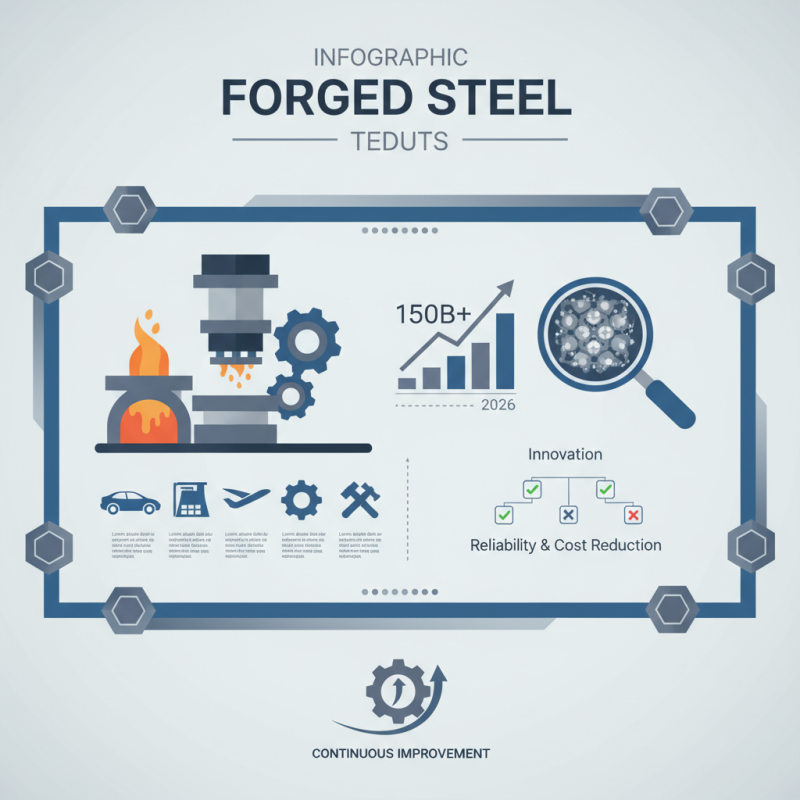
Forged Steel Parts play a crucial role in various industries, from automotive to aerospace. These components are known for their strength and durability. According to a report by Global Market Insights, the forged steel market is expected to exceed $150 billion by 2026. This significant growth reflects the increasing demand for high-performance materials.
Industry expert Dr. John Smith states, “Forged Steel Parts are essential for applications requiring exceptional mechanical properties.” His insight highlights their importance in critical settings. These parts are often used in machinery, structural applications, and tools. However, the manufacturing process can lead to challenges in quality control.
There’s a need for continuous improvement in production techniques. Not all forged steel components meet the required standards. Companies often face pressure to innovate while ensuring safety and performance. This balance is vital in enhancing reliability and reducing costs in the long term.
Definition of Forged Steel Parts and Their Characteristics
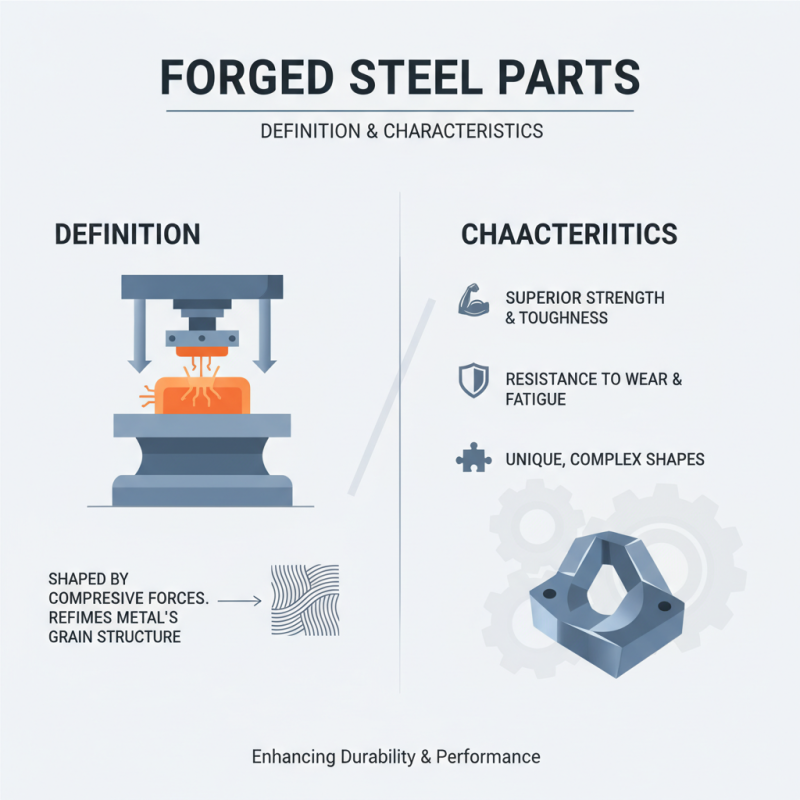
Forged steel parts are components created through a process of shaping steel using compressive forces. This technique enhances the metal's grain structure, resulting in improved strength. Characteristics include superior toughness and resistance to wear and fatigue. Forging can produce unique shapes that are difficult to achieve by other methods.
Tip: When selecting forged steel parts, consider their application and environment. Not all forged parts are the same. Some might not fit your specific needs.
In industries such as automotive and aerospace, forged steel plays a critical role. Components like gears, crankshafts, and engine parts benefit from forged steel's high stress tolerance. However, not every forged part meets strict requirements. Always verify specifications against your standards before procurement.
Tip: Regular maintenance of forged parts can prolong their life. Small issues can escalate if not addressed. Keep an eye on any signs of wear.
The Process of Manufacturing Forged Steel Parts
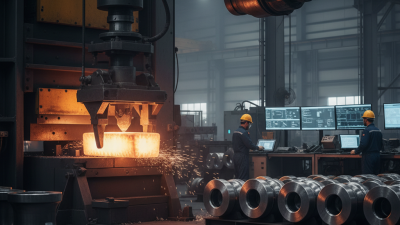
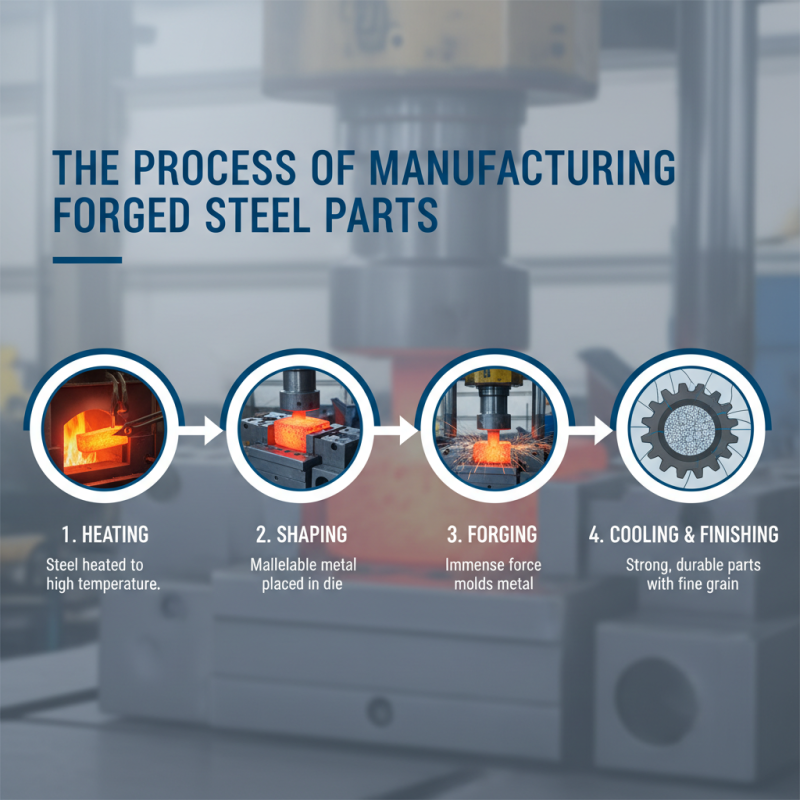
The manufacturing process of forged steel parts is intricate. It begins with heating steel to a high temperature. This makes the metal malleable and easier to shape. After heating, the steel is placed into a die. Large presses or hammers apply immense force to mold the metal. This method creates strong, durable parts with fine grain structures.
The finishing stage is crucial. After forming, additional processes like machining and polishing may follow. These steps enhance the part's surface quality. Attention to detail is vital here. Even minor imperfections can impact performance. Forged steel parts are commonly used in various industries, including automotive and aerospace. Each application demands high reliability and strength.
Despite advancements, challenges remain. Maintaining consistent quality can be difficult. Variations in temperature or pressure might lead to defects. Continual monitoring throughout the process is necessary. This ensures the final product meets exact specifications. Understanding these challenges helps improve manufacturing practices over time.
Common Applications of Forged Steel Parts in Various Industries
Forged steel parts are vital components across various industries. They offer strength and durability, making them ideal for demanding applications. In the automotive sector, approximately 30% of vehicle components utilize forged steel. This includes gears and axles. These parts enhance vehicle performance and longevity.
In the aerospace industry, forged steel is equally important. It accounts for nearly 20% of the total weight of aircraft, especially in critical components like landing gear. A recent report indicated that forged steel parts improve safety margins. They withstand extreme conditions better than their cast counterparts. Yet, there are challenges. The forging process can create internal stresses that may lead to unexpected failures.
Manufacturing industries also heavily rely on forged steel components. Scaffolding, heavy machinery, and construction tools all benefit from the reliability of these parts. Despite the benefits, maintaining quality control remains a concern. Variability in temperature and pressure during forging can lead to defects. Continuous monitoring is essential to ensure safety and performance standards are met.
What Are Forged Steel Parts and Their Applications?
This chart illustrates the percentage usage of forged steel parts across various industries, highlighting their significance in sectors like automotive and aerospace, as well as their contributions to construction, oil & gas, and manufacturing.
Advantages of Using Forged Steel Parts Over Other Materials
Forged steel parts have gained popularity in various industries. Their strength and durability often outshine those made from other materials like cast iron or aluminum. According to industry reports, forged steel performs 20-30% better in tensile strength compared to cast materials. This makes forged components ideal for critical applications, such as automotive and aerospace.
One key advantage of forged steel is its ability to withstand extreme conditions. For example, in the oil and gas industry, equipment parts face high pressures and temperatures. Forged steel parts can endure these challenges without significant deformation. Moreover, they exhibit better fatigue resistance. A study found that forged steel can last 40% longer than cast components under cyclic loading.
Additionally, forging enhances the grain structure of the metal. This results in a refined microstructure with fewer flaws. However, manufacturing forged parts is not without its challenges. The forging process can be costlier, requiring specialized equipment. Companies must balance quality with their budgetary constraints. These aspects highlight the need for careful consideration when choosing materials for specific applications.
Challenges and Considerations in Forging Steel Components
Forging steel components presents various challenges that manufacturers must navigate. One significant consideration is the temperature control during the forging process. If the steel is not heated properly, it can lead to inconsistencies in strength. This often results in weaker parts, which may fail under stress.
Material selection is another crucial factor. Different grades of steel have unique properties. Choosing the wrong alloy can compromise durability. Additionally, the size and shape of components can introduce complexities. Larger parts require more force and refines, which may lead to defects.
Furthermore, the skill of the operators matters greatly. Inexperienced workers may overlook subtle cues in the material. This can lead to costly mistakes that affect the final product. Quality control processes must be robust to catch any issues early on. Minor imperfections can grow into serious problems if not addressed promptly.
What Are Forged Steel Parts and Their Applications?
| Dimension |
Material Type |
Common Applications |
Challenges |
| Small (up to 50mm) |
Carbon Steel |
Automotive Components |
Material Brittleness |
| Medium (51mm - 150mm) |
Alloy Steel |
Heavy Machinery |
Heat Treatment Complexity |
| Large (151mm and above) |
Stainless Steel |
Construction Equipment |
Cost of Production |
| Custom Sizes |
Tool Steel |
Industrial Tools |
Design Constraints |