Why Choose Hot Forging Parts for Your Manufacturing Needs?
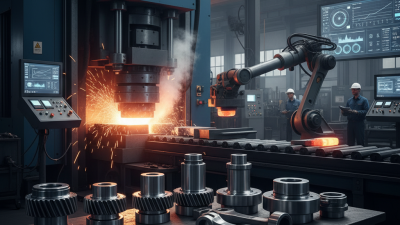
When considering manufacturing needs, the choice of materials and methods is crucial. Hot forging parts stand out as a reliable option for various industries due to their unique characteristics. This method involves shaping metal through high temperatures and significant pressure, leading to exceptional durability and performance.
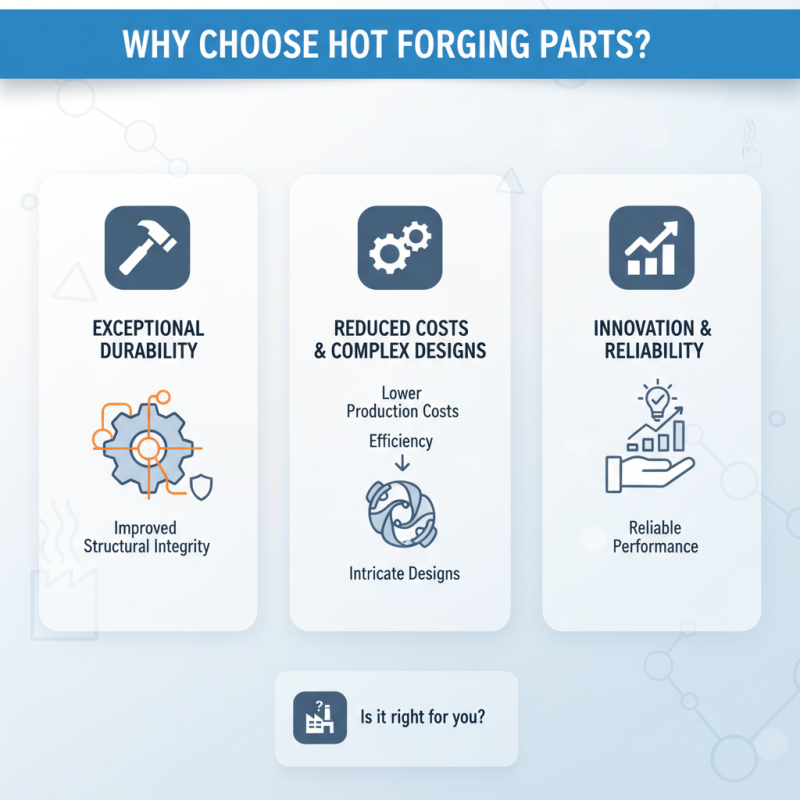
The advantages of hot forging parts extend beyond mere strength. These components exhibit improved structural integrity, reducing the likelihood of defects. Moreover, the intricate designs achievable through this process often lower production costs in the long run. However, it's important to acknowledge that while hot forging offers numerous benefits, it may not be suitable for every application.
Innovation and constant development within the hot forging industry promise even more groundbreaking solutions. Manufacturers must remain adaptable, ensuring they choose the right method for specific needs. Evaluating the reliability and efficiency of hot forging parts can significantly enhance production outcomes.
Benefits of Hot Forging in Manufacturing Processes
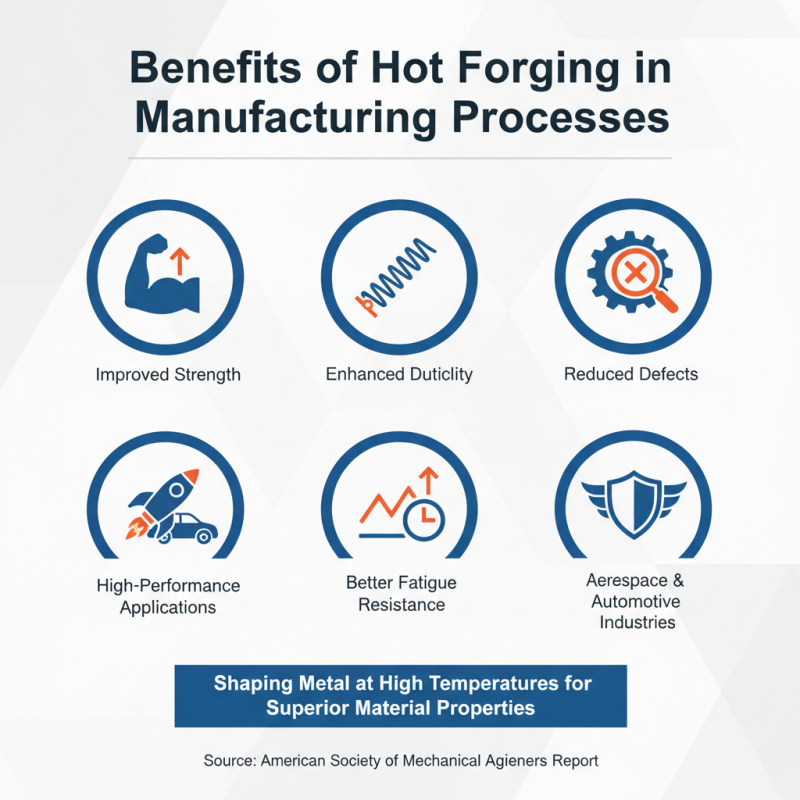
Hot forging offers significant advantages in manufacturing. By shaping metal at high temperatures, manufacturers achieve enhanced material properties. According to a report by the American Society of Mechanical Engineers, hot forging can result in improved strength and ductility. This technique reduces defects, making it ideal for high-performance applications. Additionally, parts made with hot forging often have better fatigue resistance, which is crucial for industries like automotive and aerospace.
The process of hot forging allows for intricate designs and complex geometries. This flexibility can reduce costs in finishing processes since fewer machining operations are needed. A study by the Forging Industry Association highlights that hot forged parts can be produced at faster rates than cold forging. This productivity gain can lead to shorter lead times, which is vital in today’s fast-paced manufacturing environment. However, the initial setup of hot forging can require significant capital and expertise.
Despite its benefits, hot forging comes with challenges. The high temperatures used can lead to oxidation of the metal, affecting surface quality. Manufacturers must monitor temperatures closely to mitigate these effects. Additionally, choosing the right alloy for hot forging is crucial. Some materials may not perform as expected under high temperatures. Balancing these factors is essential for optimizing production and ensuring high-quality outcomes.
Comparison of Hot Forging vs. Other Manufacturing Methods
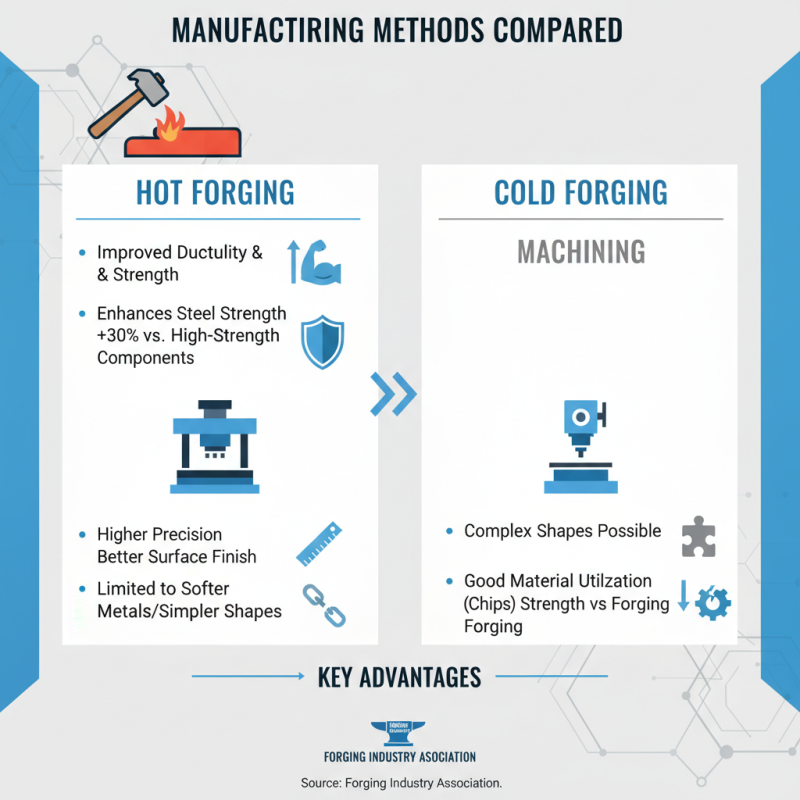
Hot forging is a prominent method in manufacturing that provides distinct advantages over other techniques. When comparing hot forging to cold forging and machining, several factors influence the selection process. For instance, hot forging allows for improved ductility and strength in metals. According to the Forging Industry Association, hot forging can enhance the mechanical properties of steel by up to 30% compared to machining. This characteristic makes it a preferred choice in industries requiring high-strength components.
Additionally, hot forging generates less material waste. A recent study indicated that the material utilization rate in hot forging can reach 90%, unlike machining, which often suffers from higher scrap rates. This efficiency not only optimizes production costs but also positively impacts the environment. However, the initial investment for hot forging equipment can be high, which is a potential drawback for smaller manufacturers. Moreover, the process may not be suitable for very intricate designs, adding complexity to some applications.
Finally, while hot forging offers notable benefits, it is essential for manufacturers to evaluate specific project requirements. For example, if tight tolerances are necessary, machining might be a preferable alternative despite the higher material waste. As the industry evolves, staying updated with the latest manufacturing trends is crucial for informed decision-making.
Applications of Hot Forging Parts Across Industries
Hot forging parts are widely used across various industries due to their numerous advantages.
These components offer enhanced strength and durability, making them ideal for demanding applications.
Automotive, aerospace, and construction sectors significantly benefit from hot forging. Each industry relies on these parts for critical functions, contributing to safety and performance.
In the automotive industry, hot forging is essential for producing engine components and transmission parts. Strength is crucial in these applications.
Manufacturers often utilize hot forging to ensure reliability under extreme conditions. Aerospace applications require even higher precision.
Hot forged parts are found in landing gear and turbine components, where failure is not an option.
Tips: When considering hot forging, evaluate the material's properties.
Different metals react uniquely during the forging process. Understanding these reactions helps in making informed decisions.
Production volume also impacts the choice of manufacturing methods.
Balancing cost and quality is always a challenge, requiring careful consideration.
Key Considerations When Choosing Hot Forging Services
When considering hot forging services, it's crucial to assess several key factors. One important consideration is the material type. Different metals behave uniquely under heat and pressure. Understanding the properties of these materials is vital. For instance, steels often yield the best results, but aluminum can offer significant weight savings in specific applications. Knowledge about material compatibility is essential.
Another aspect to consider is the experience of the forging provider. Companies with a proven track record demonstrate reliable techniques and quality. Their expertise can guide you in choosing the right specifications for your project. Additionally, understanding their production capacity is important. Not all manufacturers can handle large-volume orders efficiently. It’s wise to inquire about their lead times and how they manage unexpected demands.
Lastly, consider their quality assurance processes. Reliable hot forging service providers implement stringent quality checks. These checks ensure that the parts meet required standards. However, not all companies are transparent about their methods. Engaging in a dialogue about their quality control can reveal much about their operational integrity. Communication with the provider opens the door to collaboration, enhancing trust and reliability in your manufacturing journey.
Why Choose Hot Forging Parts for Your Manufacturing Needs? - Key Considerations When Choosing Hot Forging Services
| Consideration |
Description |
Benefits |
| Material Selection |
Choosing high-quality materials that can withstand high temperatures. |
Improved durability and performance of parts. |
| Precision Engineering |
Hot forging allows for tighter tolerances compared to other methods. |
Higher accuracy in dimensions and better fit for applications. |
| Cost Efficiency |
Although initial costs can be higher, larger quantities can reduce cost per unit. |
Long-term savings on production costs. |
| Production Scale |
Ability to produce large batches efficiently with consistent quality. |
Increased throughput and reduced cycle times. |
| Design Flexibility |
Hot forging can produce complex shapes and designs. |
Greater design options for functional and aesthetic purposes. |
| Surface Finish |
Hot forging typically results in a better surface finish compared to casting. |
Reduces the need for extensive post-processing. |
Understanding the Hot Forging Process and Its Advantages
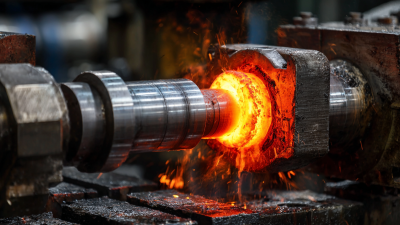
Hot forging is a crucial process in manufacturing. It involves shaping metal at high temperatures, which enhances malleability. This process allows for the creation of complex shapes with precision. When metal is heated, it becomes easier to mold. This reduces the risk of cracking, something that can happen during cold forging.
The advantages of hot forging are significant. Parts produced through this method exhibit improved grain structure. This leads to enhanced toughness and strength. In applications like automotive and aerospace, these properties are vital. However, achieving these benefits requires careful control of temperature and timing. Otherwise, the results may not meet the expected standards.
Another important aspect is the reduction of material waste. Hot forging maximizes the use of raw materials. Still, not all forged components are perfect. Often, there may be inconsistencies. Manufacturers need to implement quality checks to address these issues. Overall, understanding the hot forging process can lead to better manufacturing choices.
Advantages of Hot Forging in Manufacturing