Top Benefits of Forged Steel Parts in Modern Manufacturing?
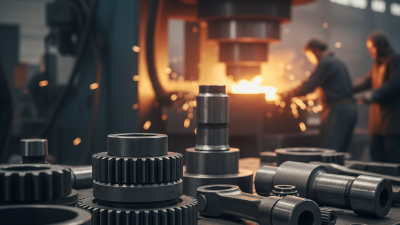
In modern manufacturing, the demand for durable and high-performance materials is ever-increasing. One of the standout choices is forged steel parts. These components are created through a process that improves their strength, making them ideal for various applications. Industries such as automotive and aerospace greatly benefit from utilizing forged steel.
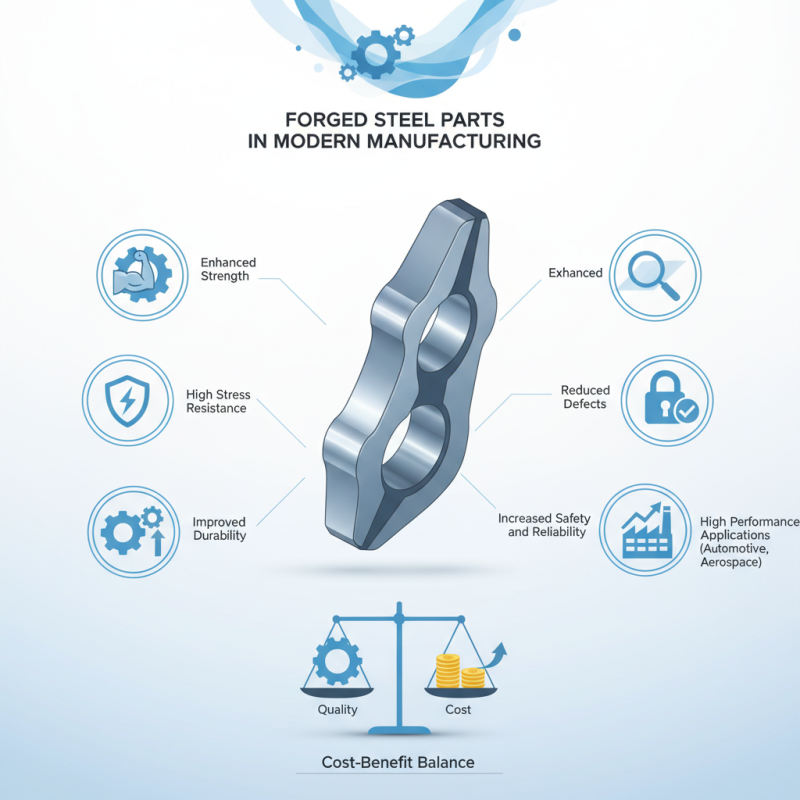
Forged steel parts offer numerous advantages. They excel in handling high-stress conditions, ensuring reliability in critical systems. The production technique not only enhances their mechanical properties but also reduces the likelihood of defects. This leads to fewer failures and increased safety in end products. However, the cost of forging processes can be a consideration for some manufacturers.
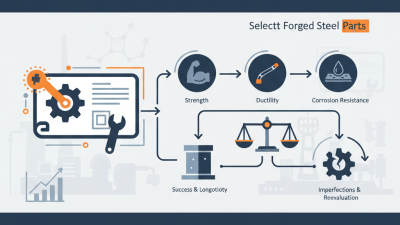
It's essential to reflect on the balance between cost and quality when choosing materials. While forged steel parts are superior, they may come at a premium. Manufacturers must evaluate their specific needs and budget constraints. In a world fueled by innovation, understanding the nuances of materials like forged steel is crucial for long-term success.
Advantages of Forged Steel Parts in Manufacturing Processes
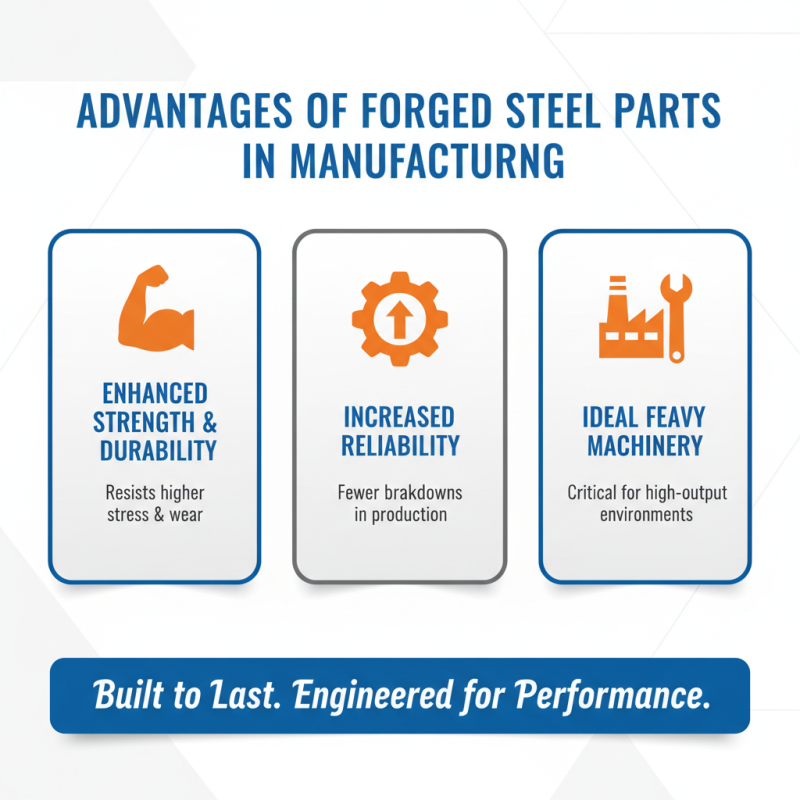
Forged steel parts offer numerous advantages in modern manufacturing processes. The forging process enhances the strength of steel, making it more durable. This results in parts that can withstand higher stress and wear. For instance, forged steel components are commonly used in heavy machinery. Their reliability leads to fewer breakdowns, which is crucial in high-production environments.
Another benefit is their resistance to impact. Forged steel parts are less likely to crack under stress. This characteristic is vital for components like gears and axles. Manufacturers appreciate reduced warranty claims due to the longevity of these parts. However, the forging process can be costly and time-consuming. Initial investment in machinery and training may deter some companies.
Sustainability is also a consideration. Forged steel can be recycled, which lessens environmental impact. Still, the energy consumption during forging raises questions. Balancing efficiency with energy use presents a challenge for many manufacturers. Overall, while forged steel offers multiple benefits, it also requires careful consideration of costs and environmental factors.
Enhanced Strength and Durability of Forged Steel Components
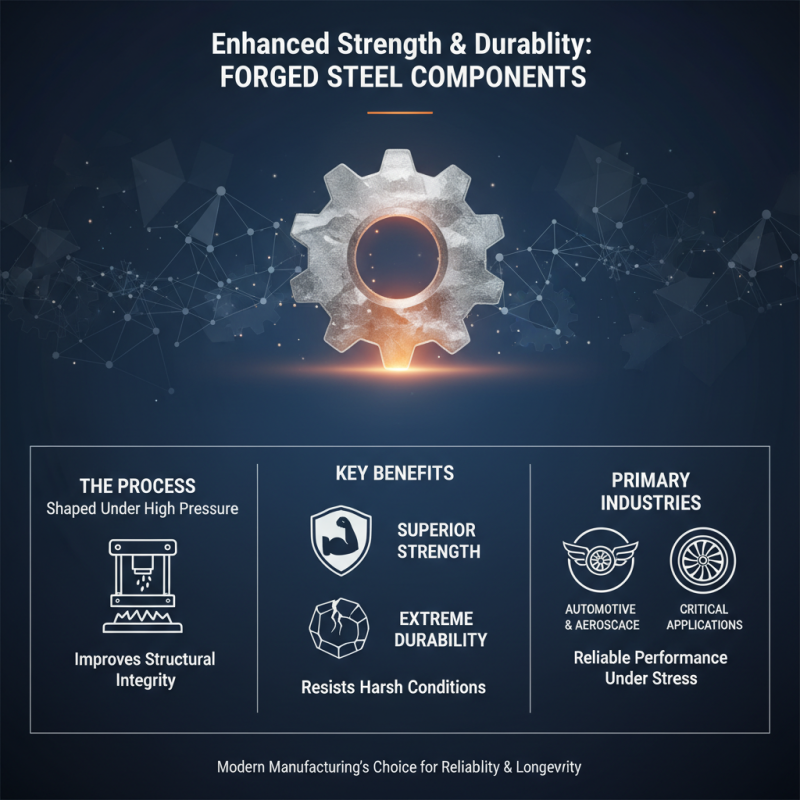
Forged steel components are gaining popularity in modern manufacturing for their enhanced strength and durability. The forging process involves shaping the steel under high pressure, which improves its structural integrity. As a result, these parts can withstand harsh conditions better than other materials. For instance, automotive and aerospace sectors benefit significantly from this strength. Their components face extreme stress and require reliable performance.
Moreover, forged steel parts offer impressive fatigue resistance. They can endure repeated cycles of stress without failing. This characteristic is vital in applications where components are subjected to continuous movement. However, manufacturers must weigh the benefits against their costs. The initial investment can be higher than other alternatives. Additionally, achieving the right balance in production methods can be challenging. Potential flaws, like internal defects, may appear if not monitored closely. This requires ongoing quality assurance efforts.
Another aspect to consider is weight. Although forged steel components are stronger, they can also be heavier. This might not be ideal for every application. Engineers must evaluate whether the added weight will impact the overall design. Forged steel is not a one-size-fits-all solution. The advantages are clear, but a careful approach is essential in selecting the right materials for specific needs.
Cost-Effectiveness of Forged Steel in Production
Forged steel parts play a crucial role in modern manufacturing due to their
cost-effectiveness. According to a report by the Research Institute for Advanced Manufacturing,
forged steel can reduce production costs by up to 30% compared to cast parts. This significant reduction
is primarily due to less material waste and shorter production cycles. The precision involved in forging allows manufacturers to create
complex shapes without excessive excess material.
Moreover, the durability of forged steel components leads to long-term savings. Parts
produced through forging exhibit superior strength and resistance to wear. A study by the Steel Forging Industry Association
reveals that forged components can last up to 50% longer than their cast counterparts.
While the initial setup costs for forging can be higher, the extended lifespan and reduced maintenance needs often prove advantageous in
the long run.
However, manufacturers must also consider the upfront investment. Not all operations can
afford high-capacity forging equipment. The benefits may not be evident for smaller production runs or niche applications. Manufacturers must reflect
on their specific needs before committing. Balancing costs and benefits is key
to leveraging forged steel in a competitive market.
Improved Machinability and Fabrication of Forged Steel Parts
Forged steel parts have transformed modern manufacturing significantly. Their improved machinability is a critical factor in this evolution. A recent industry report highlights that forged steel parts have an up to 30% higher machinability rating compared to cast parts. This is crucial for manufacturers focused on efficiency and productivity. Improved machinability means shorter cycle times and reduced tool wear. These attributes ultimately lead to cost savings and less downtime in production lines.
The fabrication process of forged steel also plays a vital role. It allows for intricate shapes without sacrificing strength. Research indicates that over 75% of manufacturers favor forged options for complex parts. The warm and hot forging techniques used help in achieving better mechanical properties. However, not all manufacturers adopt these techniques. Some face challenges in scaling the process. When executed poorly, it can lead to inconsistent quality. This inconsistency raises questions about reliability that should not be overlooked.
Interestingly, while the advantages are apparent, there is room for improvement. Some manufacturers struggle with the initial investment necessary for forged steel technology. These barriers prevent many from fully embracing its benefits. Education and investment in proper training could help bridge this gap. It's an area that needs more attention as the market continues to evolve and adapt to new technologies.
Applications of Forged Steel in Various Industries
Forged steel parts are essential in various industries. Their strength and durability make them ideal for high-stress applications. The automotive sector extensively uses these components. According to a recent industry report, around 80% of commercial vehicle frames utilize forged steel. This material's resistance to wear leads to longer lifespans and reduced replacement needs, which is crucial for manufacturers.
In the aerospace industry, forged steel is vital. Components like landing gears and engine parts require exceptional strength. Statistics show that products made from forged steel offer up to 25% more fatigue resistance than their cast counterparts. This advantage translates into enhanced safety and performance in flight operations. However, the production process can be energy-intensive, raising concerns about environmental impact.
The oil and gas sector also employs forged steel for pipelines and connectors. Its ability to withstand harsh conditions is unmatched. A report highlights that failures in these parts can lead to significant operational costs. It’s a reminder that while forged steel provides benefits, monitoring quality is crucial. Neglecting this can undermine its advantages and lead to safety risks.